
Taliaferro County Criminal Court Cases
Taliaferro Superior Court is the county's felony-level trial court. Its clerk keeps accusations, indictments, motions, pleas, judgments, sentences, and other filed papers. The clerk also manages Juvenile Court records, though juvenile matters carry strong confidentiality limits and are not ordinary public criminal dockets. Traffic and qualifying misdemeanor matters may be heard in Probate Court or a municipal court. A misdemeanor that is not resolved there can reach Superior Court.
Court level matters. The Superior Court clerk is at 113 Monument Street in Crawfordville and answers 706-456-2123. Probate Court can be reached at 706-456-2253. For a city citation, call Crawfordville City Hall at 706-456-2605 or Sharon City Hall at 706-456-2273 to confirm which court received it. A mailing address does not establish jurisdiction. The event location, issuing agency, and charging court do.
Taliaferro Court Clerk Counter
Call Clerk Herberina M. Turner's office before making a trip. Give the full legal name, an approximate filing or arrest year, and the case number when known. Ask whether the file is in Superior Court and whether older material needs archive retrieval. The published counter hours are 9:00 a.m. to 5:00 p.m., Monday through Friday, with a noon-to-1:00 p.m. closure.
The official Taliaferro clerk profile confirms the address, telephone, fax, courts managed, and court terms. That source also supplied the clerk image below.
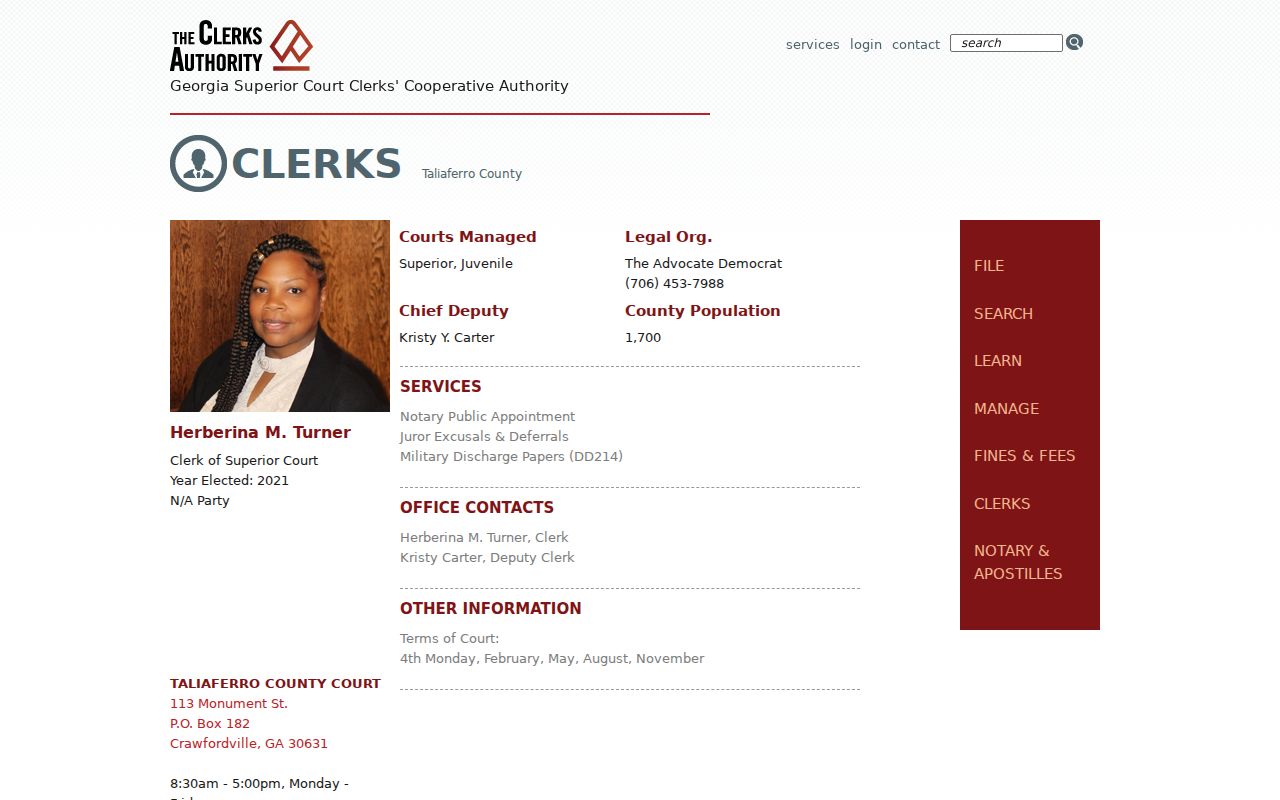
Use the profile to confirm contact details, then ask the clerk about inspection, ordinary copies, certification, delivery method, and current cost. No local criminal-copy fee schedule was found, so a price should not be assumed.
Taliaferro Superior Court Clerk
113 Monument Street
Crawfordville, GA 30631
706-456-2123
Monday through Friday, 9:00 a.m. to 5:00 p.m.; closed noon to 1:00 p.m.
Searching Taliaferro County Case Records
No verified public Taliaferro criminal case portal provides a complete name search. Use the clerk workflow below. It reaches the custodian and avoids mistaking Georgia's electronic filing system for a public index.
- Identify the likely court from the charge type and issuing agency.
- Call the clerk with the full legal name and a narrow year range.
- Provide the case number when available and ask the clerk to distinguish similar names.
- Request the docket and the specific filed document needed, such as an indictment, plea, judgment, or sentence.
- Ask for a certified disposition when the official outcome, rather than a docket printout, is required.
| Field Label | Type | Required | Notes |
|---|---|---|---|
| Full legal name | Text | Alternative | Use complete spelling and aliases if known |
| Case number | Text | Preferred | Best direct locator for a known file |
| Filing year | Date range | Recommended | Narrows name and archive work |
| Date of birth | Date | Access dependent | Ask whether the clerk may use it to distinguish names |
| Court or case type | Text | Recommended | Superior, Probate, or municipal matter |
Taliaferro E-Filing Is Not Search
Taliaferro Superior Court has mandatory criminal e-filing. That rule governs how authorized filers submit papers. It does not promise a free public name-search portal, remote document images, or access to sealed material. The Georgia Courts e-filing page is useful for confirming filing status, not for replacing the clerk.
The Georgia Courts emergency-order archive also identifies the six-county Toombs Circuit and records orders that can alter court operations. Its image below shows the official court source.
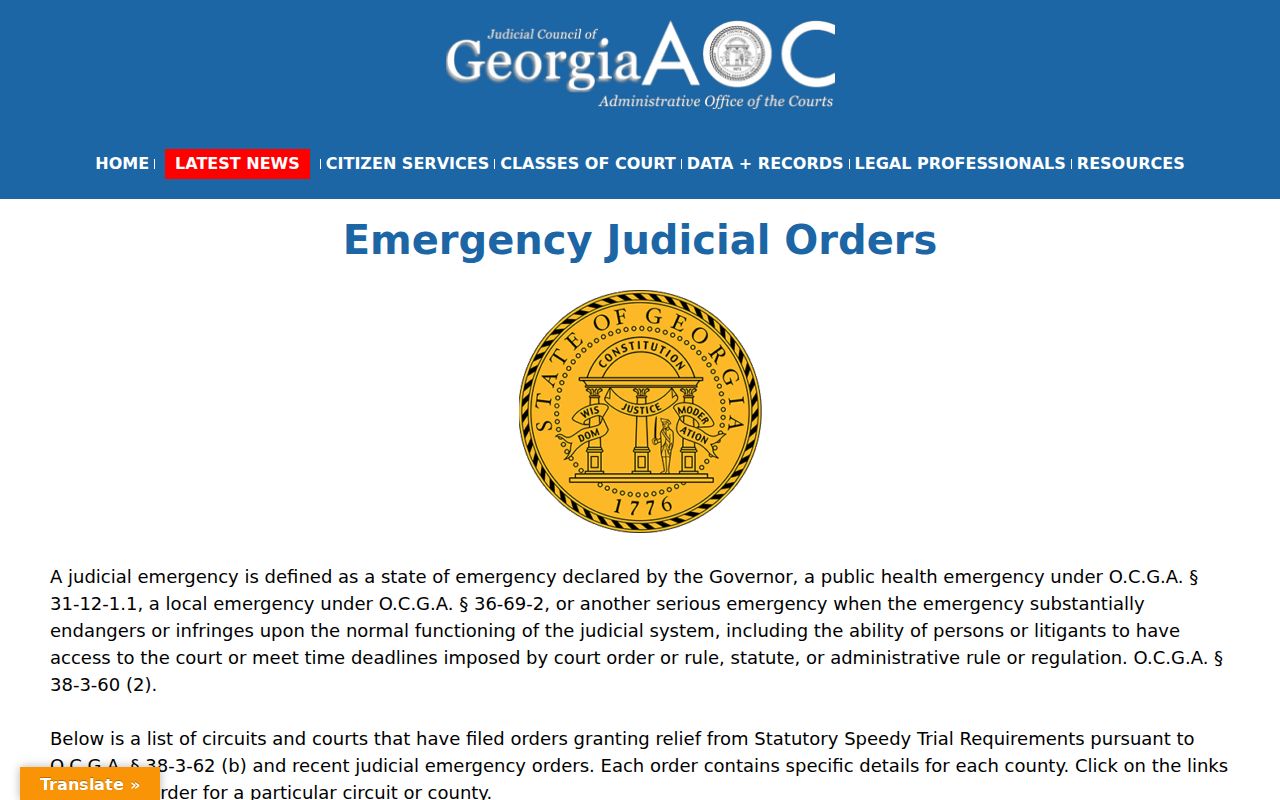
After severe weather or another emergency, confirm hearing dates and counter access directly. A changed calendar does not erase the docket entry or transfer custody of the file.
Inside a Taliaferro County Case File
A court file reflects prosecution, not merely arrest. It may show the charge selected by the prosecutor, the plea, hearing activity, motions, disposition, and sentence. Filed charges can differ from the officer's booking labels. Read the document tied to each docket event before drawing a conclusion.
| Case Number & Court | Identifies the file, court level, and jurisdiction. |
|---|---|
| Charging Document | Shows the accusation or returned indictment and filed counts. |
| Docket Entries | Chronological list of filings, hearings, orders, and case activity. |
| Hearing Dates | Scheduled and completed court events, subject to later changes. |
| Disposition & Judgment | Records the outcome of each count and the court's judgment. |
| Sentence & Conditions | States custody, probation, financial terms, or other ordered conditions. |
Taliaferro Fourth-Monday Court Terms
The clerk profile lists Superior Court terms beginning on the fourth Monday in February, May, August, and November. This schedule helps explain why grand-jury and trial activity may cluster, but it is not a promise that a specific case will move on one of those dates. Use the case docket and current court calendar for that matter.
The historic courthouse remains the records hub. The Taliaferro Sheriff's Office site provides local justice links and supplied the official local image below.

Do not use a term date as a substitute for the clerk's confirmation. Continuances, emergency orders, and case-specific rulings can change the next event.
How a Criminal Case Moves
An arrest may lead to a first appearance and then a prosecutor's charging decision. An accusation or indictment begins the filed Superior Court case. Arraignment states the charges and records a plea. Motions and pretrial hearings can follow. The case may end by plea, trial, dismissal, nolle prosequi, or another lawful status. Sentencing follows a guilty judgment.
Case flow: Charges Filed › Arraignment › Pretrial › Plea or Trial › Disposition › Sentencing
A dead docket means prosecution has been postponed indefinitely. It is not the same as an acquittal. A nolle prosequi means the prosecutor has chosen not to proceed at that time. Ask for the disposition document when a short docket label is unclear.
Taliaferro Felonies in Toombs Circuit
The Toombs Judicial Circuit serves Taliaferro, Glascock, Lincoln, McDuffie, Warren, and Wilkes counties. Its District Attorney prosecutes felony cases and certain other matters. The main office is in Thomson, yet the Taliaferro court file remains with the clerk in Crawfordville. Those offices have different roles and different records.
The sheriff's official District Attorney page routes readers to the circuit office and supplied this image.
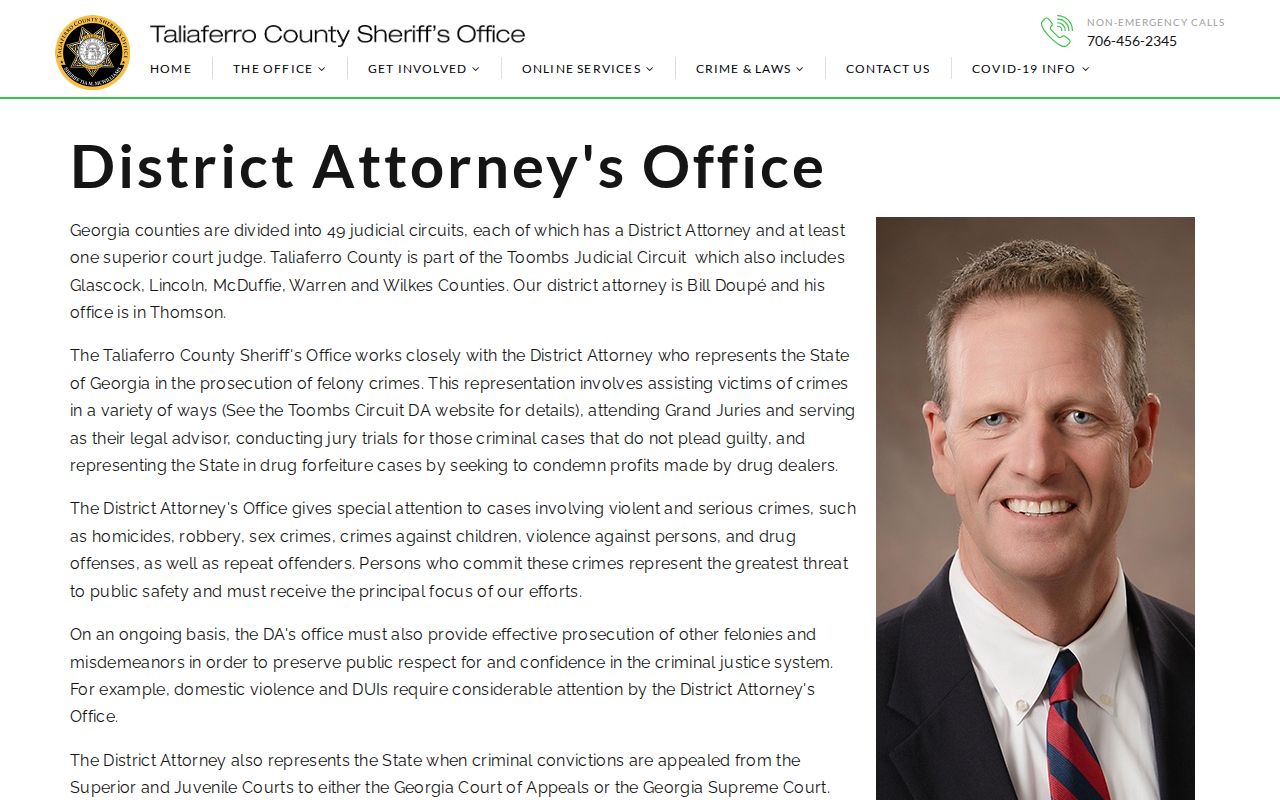
Contact the prosecutor about prosecution decisions or an eligible post-2013 record-restriction request. Contact the clerk for filed documents, judgments, and certified copies. The Toombs Circuit DA office description explains its felony and misdemeanor functions.
Taliaferro Charges and Judgments
Three labels can describe the same event at different points. The arrest charge states the officer's basis for custody. The accusation or indictment states what the prosecutor or grand jury filed. The judgment states what the court ultimately decided. A sound case search checks all three instead of treating the earliest label as final.
- Indictment
- A formal felony charge returned by a grand jury.
- Disposition
- The current or final resolution of a charge.
- Certified disposition
- A clerk-authenticated record of the case outcome.
- First Offender
- Georgia treatment that may avoid an adjudication of guilt after successful completion, subject to statutory rules.
The Georgia Sheriffs' Association directory confirms the local law-enforcement contact and supplied the image below.
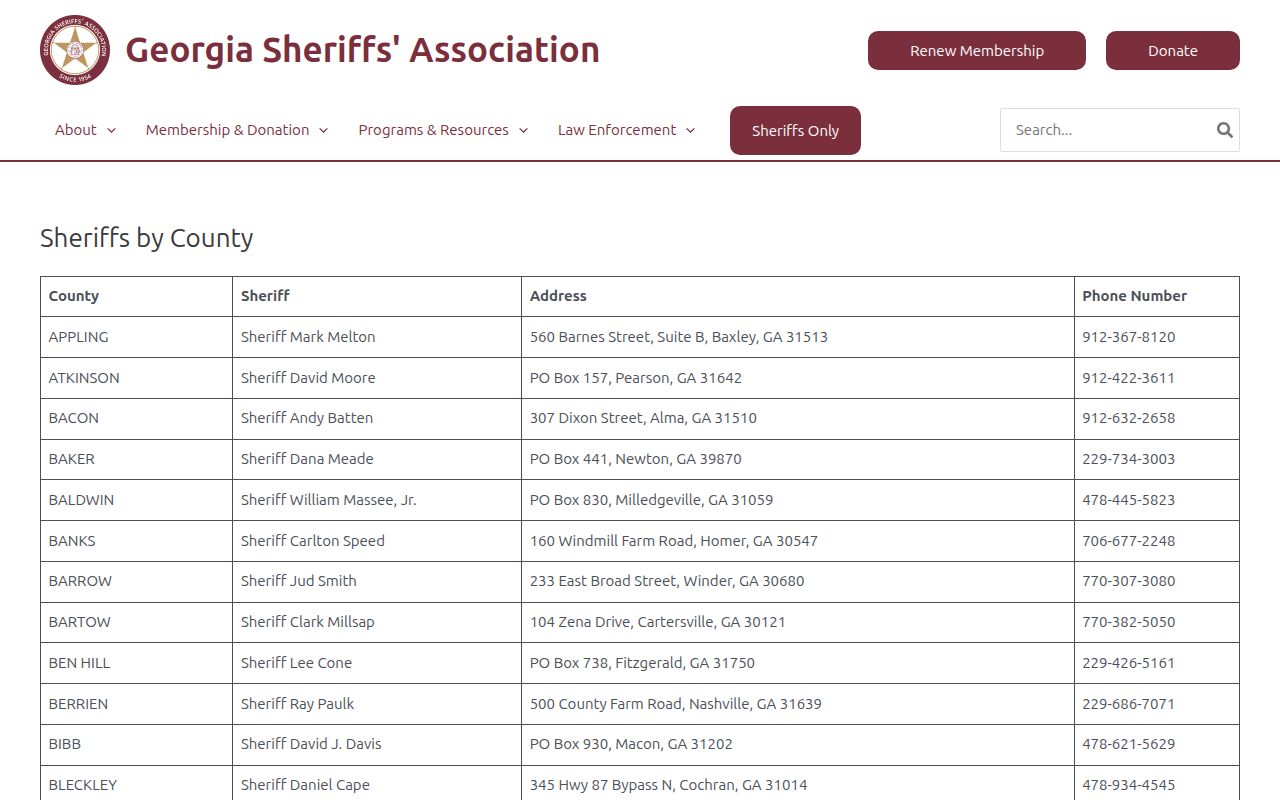
The sheriff's arrest report can help locate the event, but only the appropriate clerk can authenticate the court outcome.
Case Record Access and Restrictions
Georgia court files are generally held by clerks for public access, but that rule has limits. Sealed records, juvenile matters, confidential victim information, and protected identifiers are not ordinary public content. A missing name is not proof that no case exists. It may reflect spelling, a different court, an archive, a restricted record, or a file that is not indexed online.
The Georgia Attorney General's open-government resources explain the Georgia Open Records Act. Court access also follows judicial rules and sealing orders. Ask the clerk which rule controls a withheld court document. Record restriction under O.C.G.A. § 35-3-37 limits eligible criminal-history dissemination, while court-record sealing is a related but separate step.
Note: A Taliaferro County docket entry is an index clue; the filed order is the stronger source for its legal effect.